The huge revenue earning potential of shopping and dining ensures that getting the right mix of facilities is vital to the success of any airport city, writes Chris LeTourneur.
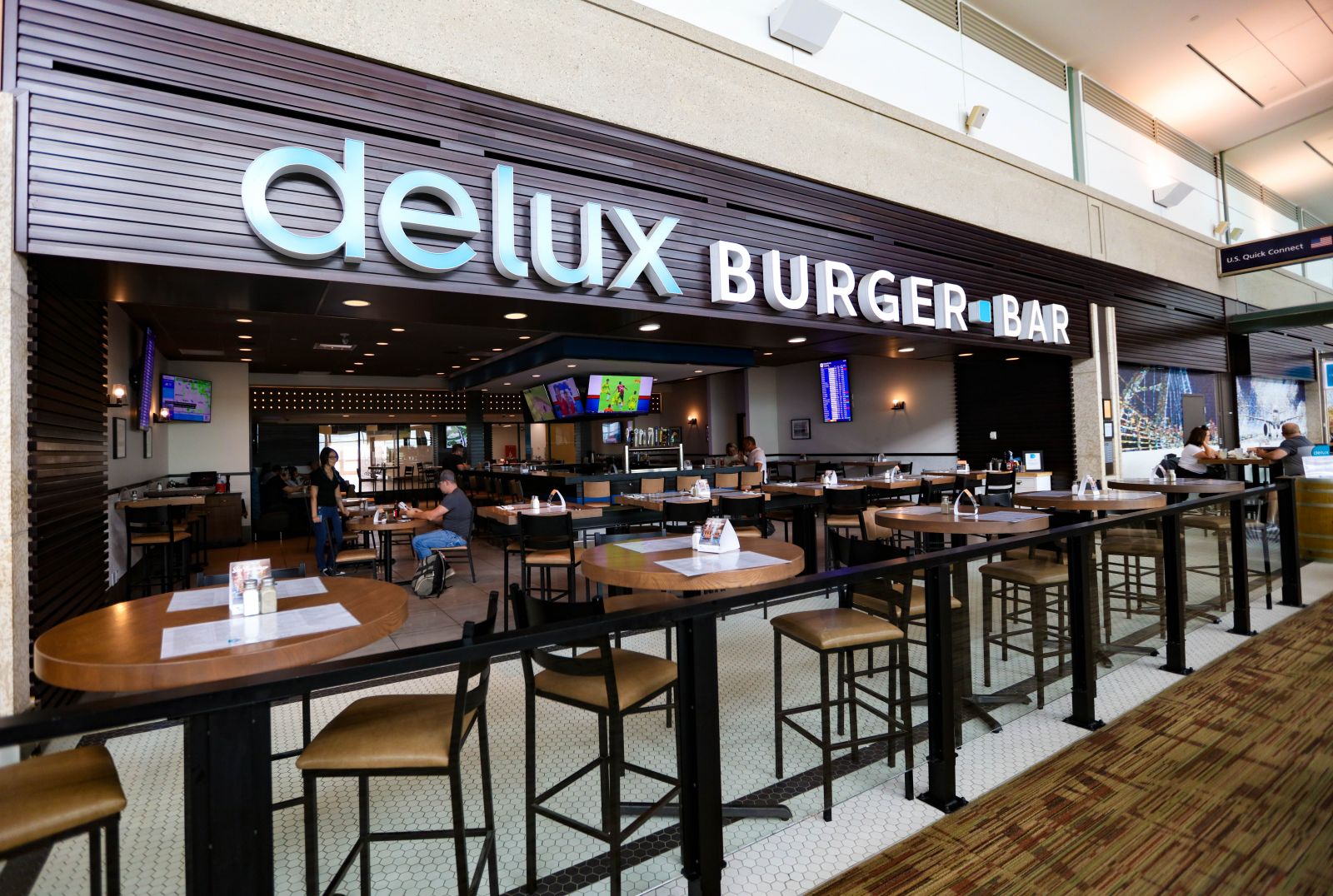
Enhanced retail has been a critical element in sowing the seeds of creating the world’s emerging airport cities. Airports such as Amsterdam Schiphol, London Heathrow and Hong Kong now feel more like shopping centres than traditional gateways and others are following suit as, over the last decade, airports around the globe have recognised the importance of retail and food/beverage (F&B) facilities for generating non-aeronautical revenues.
Retailing is, of course, all about exposure to foot traffic and brand awareness, and the guaranteed passenger flow through an airport terminal provides a captive market opportunity for savvy retailers to embrace.
In addition to pursuing non-aeronautical revenue streams from retail operations, airports are now recognising the role of retail, F&B and entertainment for enhancing their airport experience and competitiveness. As a result, the retail focus has now evolved out of the terminals and onto the commercial lands at and around airports. The areas surrounding an airport, in many cases, providing some of the only land available for development in urban regions.
The collective destination appeal and economic catalyst of airports has placed them clearly on the radar screen of major retail operators and shopping centre developers. It may, however, take time for many to realise this potential as most gateways are still immersed in the first and second “waves” of their retail evolution, where the emphasis is firmly focused on the airside and landside offering in the terminal building.
As the third and fourth waves of destination retail evolve and extend the target audience outwards to cover destination tourists and the regional population base, airports will have to meet a new set of operating and site criteria that are very different from the first and second waves of ‘terminal retail’.
They include the need for:
- Larger store formats of 60,000-300,000sqft for anchor retailers, 10,000-30,000sqft for junior anchors and 1,200-7,000sqft for in-line tenants
- Direct access and exposure to the landside arterial roadways and highways
- A typical ratio of 3 to 1 for site parcel area to building area to accommodate buildings, parking, manoeuvring and landscaping
- Parking at a rate of 5 spaces for every 1,000sqft of leasable retail space
- The ability to access a full-time population base of 300,000 inhabitants within 10 miles
- The ability to generate retail sales of at least $350 per sqft per annum
North America
One of the first and foremost examples of the economic synergy between an airport and its adjacent destination retail facilities is at Minneapolis-St Paul International Airport (MSP), where the Mall of America continues to be one of the largest and most dominant retail centres in North America.
Located on privately owned lands directly adjacent to the Minnesota gateway, the Mall of America (MOA) features 2.5 million sqft of retail shops, entertainment, restaurants and an indoor amusement park, within a 4.2 million sqft area.
The initial phase of the MOA included 520 stores, 86 restaurants and 12,550 parking bays and employs 13,000 people. Its tenants include Macy’s, Bloomingdales, Nordstrom and Sears as well as key attractions such as the Underwater Adventures Aquarium, Lego Imagination Center, Dinosaur Walk Museum, NASCAR Virtual Silicon Motor Speedway and ACES Flight Simulation.
An additional 5.6 million sqft of commercial development and a 260,000sqft IKEA furniture store was added in 2004.
In conjunction with MSP and the Mall of America, hotels, a conference centre, office/business park, reception fitness & spa, performing arts centre, dinner theatre and waterpark have evolved as part of MSP’s airport city.
From its inception in 1986, the Canadian-based Triple Five Group developed MOA has always shared close relationships with the Bloomington Port Authority and MSP. Today, representatives from the MOA participate on the MSP Airport Foundation Board to ensure that the economic relationship between MSP and the Mall of America are fostered. In this regard, in 2004, a Light Rail Transit connection was established between the Mall of America and MSP’s Lindberg and Richfield Terminals. This connection provides layover and destination air passengers with the opportunity to enjoy international shopping and dining as they pass through MSP.
The MOA contributes $1.8 billion of regional economic impact annually. A notable portion of this inflow of spending is born from destination shopping by visitors from Europe and Asia utilising MSP and its scheduled air carriers as their gateway to this airport city.
Metropolitan Airports Commission’s executive director, Jeff Hamiel, says: “The mall’s proximity to the airport makes it an ideal place for passengers with extended layovers to spend some time shopping, dining and enjoying all the mall has to offer. The addition of the light rail service has made it even more convenient for our passengers to travel to the mall.”
In a bold move to embrace the same opportunities afforded at the Mall of America, Dallas/Fort Worth International Airport (DFW) recently announced plans to develop a major mixed-use commercial project on its non-airside commercial lands. The initiative, called ‘Passport Park’, will evolve on the southern gateway to DFW, exploiting the location’s centrality to the residential population base of the Greater Dallas/Fort Worth Metroplex.
Passport Park’s retail components will be developed in a “hybrid lifestyle retail” configuration involving two major ‘big box’ anchor stores of over 100,000sqft, four junior anchor stores of 20,000-40,000sqft, 64,000sqft of supporting strip retail and over 92,000sqft of restaurant and retail pad sites.
Additionally, on a separate site directly adjacent to the airport’s Rental Car Center, it will develop a Restaurant Plaza on 10 acres of land in a bid to appeal to some of the airport’s 4,000 daily rental car customers and over 80,000 passengers a day that travel along DFW’s International Parkway service road.
Recognising the significant retail sales and rent revenues that could be generated by such projects, DFW has decided to take a pro-active role in their development through the formation of “strategic development partnerships”, whereby the airport controls the land contribution and a private developer constructs the buildings. Recognising the complexities of ground leasing airport lands for non-airside commercial development, this approach is seen to be a win-win for both parties.
Another leading edge airport commercial land development initiative is unfolding at Portland International Airport (PDX) where, as part of its emerging airport city plans, the MAX Light Rail Transit line has been created to connect the gateway with an adjacent 120-acre commercial development project.
The project, called Cascade Station, is a joint development effort between the Port of Portland, the Portland Development Commission, the City of Portland, Tri-Met and the Cascade Development Company (which is a partnership of the Trammell Crow Company, Bechtel and CenterCal Properties). In exchange for the rights to develop Cascade Station, Bechtel helped finance the MAX line to the airport. At its completion, Cascade Station will include 800,000 sqft of retail space, 1.2 million sqft of office/business park space, 250 hotel rooms and a gas bar facility.
Committed retailers to the project include REI Sports, Nordstrom Rack, Pier 1 Imports, Magnolia Hi-Fi, Bon Marche Home Store, Linens & Things and Ethan Allen Home. A ‘restaurant row’ is expected to form the village/main street heart and soul of Cascade Station which, upon completion, will generate over 7,000 new jobs and $2.4 million in annual property tax revenues for the city.
Beyond the airport industry, retail developers and operators have also recognised the opportunity to establish shopping centres in close proximity to airports. Two of these organisations include Taubman Centers – its Dolphin Mall is located on the western edge of Miami International Airport – and the Mills Corporation which has developed mega shopping centres close to DFW (Grapevine Mills), Phoenix Sky Harbor (Arizona Mills) and Ontario (Ontario Mills) airports.

The Far East
In Asia, where many new airport cities are now taking shape, destination retail facilities have become key attractions at Hong Kong and Seoul Incheon.
and Seoul Incheon. Indeed many feel that Hong Kong International Airport’s SkyPlaza, a key element the gateway’s SkyCity development project, has brought a new dimension to landside retail facilities in airport terminals. It features over 400,000sqft of retail and entertainment functions – including an Imax 3D cinema – within a short walk of the gateway’s check-in desks. Target audiences for SkyPlaza include passengers, tour groups, local residents and airport employees. The facility is directly linked to Hong Kong Disney and the city beyond by the Airport Express rail link.
Similarly, the AirCity evolving at Incheon International Airport in South Korea utilises shopping, entertainment, amusements and cultural celebration as the pillars of its airport city initiative. Its 700,000sqft of commercial space will make it the largest single airport retail development in the world.
evelopment in the world. A focal point of Incheon’s retail experience is ‘Airjoy’, a multi-theme shopping and leisure complex comprised of duty free shops, department stores, E-Mart (Korea’s largest discount store), book shops, toy museum, convenience, gift and souvenir stores.
It will soon be joined New Songdo City, a major mixed-use development being built on 1,500 acres of reclaimed land within the Incheon Free Economic Zone (IFEZ). Connected to Incheon by a 7.4 mile long bridge scheduled to open in 2009, New Songdo City will boast a 300,000sqft convention centre, more than 1,000 hotel rooms, 50 million sqft of office space, a government/cultural complex, 30 million sqft of residential housing and 10 million sqft of retail space.
The firms behind its development are Gale International and Posco E&C and they have succeeded in attracting global investment from North American retail developers/operators that include Taubman Centers (through its Asian affiliate, Taubman Asia).
Gale international chairman, Stanley Gale, enthuses: “New Songdo’s proximity to Incheon International Airport provides an access to a major transportation hub rarely enjoyed by a major, modern city. The airport helps position New Songdo as a hub and gateway to Northeast Asia with three quarters of the world’s population within three-and-a-half hours flying time from Incheon.”
Clearly, the Asian airport city examples demonstrate the significant and interconnected role of destination retail, leisure, entertainment and amusements for anchoring these airport cities and enhancing the airport city experience not only for passengers, but also for destination tourists, airport employees and regional residents.

Australia
At Australia’s Adelaide International Airport, the Swedish furniture store, IKEA, recently completed construction of a concept store on an 18-acre site just west of the airport’s main runway. This 260,000sqft store is operated by way of a franchise with Western Australia-based Cebas Pty Ltd. Additionally, Harbour Town, a 215,000sqft brand retail centre opened on Airport Lands in 2003. Although Harbour Town enjoys views of the airside system, given its strategic location in the middle of the region, it draws its customer base from the full-time population base of the region.
Europe
Athens International Airport also has its own IKEA store, although its is located in the Airport Retail Park around two kilometres from the main terminal building. It is complemented by the Kotsovolos Megastore, a 45,200sqft store selling home electronics and appliances. The park also includes the One-Way Technostore (selling computers, telecoms and
IT equipment) and the Olympus Plaza Food Park restaurants. The addition of these destination retail functions responds to the gateway’s objectives for its airport city to be “complementary yet not exclusive”.
Elsewhere, Helsinki-Vantaa International Airport is developing the Jumbo Shopping Centre as part of its ‘Aviapolis’ aviation city. This retail development initiative has been driven by Finland’s Stockman Department Store in conjunction with the joint private/public Aviapolis Development Team. Jumbo Shopping Centre involves a 400,000sqft Stockman Department Store and a further 120 specialty brandname and Finnish retail shops in approximately 915,000sqft of space. It will also have parking for 4,600 vehicles. A common theme for the centre is to provide leisure, entertainment and wellness for the ‘Aviapolis’ community.
Middle East
In the United Arab Emirates (UAE) where Dubai International Airport has evolved in concert with a considerable amount of new hotel, office, residential and retail development, Al Futtaim Investments has capitalised on airport proximity with its new Dubai Festival City development.
Like the examples in Australia, Europe and the USA, this major mixed use project is anchored by a large IKEA furniture store as well as a Super-Panda hypermarket. These anchor stores are complemented by 2.1 million sqft of retail, restaurants and entertainment facilities that have led to it being coined as an ‘Urban retail resort’. Clearly, the audience for this mega project extends far beyond airport passengers to include destination tourists, as well as on-site and regional residents.
Obstacles To Growth
A notable obstacle to developing destination retail at and around airports has been land tenure. Most airports do not have the ability to sell-off land in fee simple and therefore must either develop such retail facilities themselves (possibly in a joint venture with the private sector as is the case at DFW) or by offering property by way of ground lease.
If the ground lease mechanism is used, the terms of lease must exceed a minimum of 40 years in order to allow developers to amortise the value of the buildings and improvements. This method is becoming more accepted by the retail industry as large tracts of urban development lands become scarce. However, this land tenure issue is a primary reason why to date most major destination retail centres have evolved directly adjacent to but just off airport controlled lands.
Destination retail centres also stimulate considerable traffic impacts and, accordingly, road systems must have the ability to provide smooth and convenient access to retail facilities without compromising groundside access to and from adjacent airports. Inter-jurisdictional overlap, as well as sales and property tax collection battles between airport authorities and adjacent counties and municipal agencies have also posed a challenge for such destination retail projects at and around airports.
Outlook
Looking to the future, trends in ‘destination retail’ and the evolution of airport cities are in complete alignment, as the retail industry seeks new market opportunities and airports look to create new revenue streams and enhance their airport experience and competitiveness.
The major trend in global retailing has gravitated towards engaging
‘street-oriented lifestyle retail’ environments, such as found at the Grove (developed by Caruso Affiliated) in Los Angeles. These retail projects are becoming more like mini-towns than shopping centres, with the emphasis on place making features and community gathering, while at the same time providing value for price.
These retail objectives are in alignment with those of the airport city movement to establish the area at and around airports with multiple uses that foster economic synergy, stimulate new revenue streams and enhance the sense of place.
The increasing opportunity for destination retail facilities at the world’s gateways will rely heavily on the ability of airport authorities and retail developers to work in tandem to harness this opportunity by respecting each others business models while evolving new business approaches.