Chris LeTourneur and Andrew Fayn consider whether you really can sell anything at airports.
Wine bars, art displays, celebrity chef restaurants, luxury clothing boutiques and digital media flagship stores.
These concepts may sound like part of a new shopping mall in downtown Los Angeles or London, but they are in fact increasingly becoming part of the furniture at airports across the globe.
At the same time, in the pursuit of generating non-aeronautical revenues to offset airline landing fees, many of the world’s leading airports now exceed 60% of their annual gross revenues from retail and other non-aeronautical concessions.
The recent re-alignment of the global economy has resulted in a more conservative re-thinking of the lofty air traffic passenger projections from the past decade, whereby the role of retail at and around airport terminals will become increasingly important.
The traditional role of airports as a transfer point between destinations has, of course, dramatically shifted. With increased security measures after 9/11, dwell times before flights have increased considerably. In many instances, airport terminals are the only point of contact a traveller may experience with a city or country, so it is essential there are retail services, dining and entertainment options available while waiting for their next flight.
Every day millions of passengers open their wallets in airport shops to buy gifts for family, friends and themselves. Global airport retailing is a $27 billion market, and trails only the Internet as the fastest growing retail network on a global scale.
It is no wonder then that airport operators are taking notice of how to stay ahead of their competition to enhance their passenger experience and non-aeronautical revenues.
Today, even with declining sales in traditional retail shopping centres, high streets and other retail venues because of the economic slowdown of Q4 2008, airport retail sales have remained consistent on a per capita basis. In the near future, the challenge will be to generate more sales from potentially fewer passengers, which begs the question of whether you really can sell anything in airports?
Passengers are customers and, for the retail industry, the passenger demographics at airports is very attractive.
While most major airports differ regarding ethnicity, data relating to age and income are quite similar when comparing figures from both New York JFK and Amsterdam Schiphol. According to the Annual Airport Traffic Report the average age bracket of passengers is 25 to 44 years old, with a mean age of 38 years. Passengers’ average household income falls between $60K and $70K per year, while almost 30% of travellers earn over $100K per year.
Furthermore, statistics show that over 60% of travellers in major airports possess college degrees or higher. What this all means is that the majority of travellers are well-educated professionals that have fairly high incomes and enjoy tremendous purchasing power.
Retailing is increasingly becoming associated with personal lifestyle preferences and values, that are in alignment with these air traveller market segments.
These preferences and values include an appreciation and desire for ‘adventure’, ‘discovery’, ‘wellness’, ‘education’, ‘culture’, ‘celebration’ and the ‘culinary arts’. There are considerable opportunities for retailers to reach out to these captive customer segments, as many are tired of the noisy and unhealthy fast food outlets, sports bars, and lack of sensory stimulating shopping experiences.
The staple items of books, media, liquor, tobacco and cosmetics that are the glue for airport retail will continue to be popular. However, expanding beyond these fundamentals is now critical and integral for every airport in order to keep the attention of passengers and turn them into higher value customers.
The retail mix is shifting to meet the needs of the finicky shopper towards mobile technology, personal health, high-end fashion and culinary flavours from around the world.
More sophisticated and tranquil options are emerging for those passengers who are looking to escape from the hustle and bustle of the airport terminal.
The wine bar Vino Volo has become extremely popular in nine terminals across the United States. It offers local wines paired with first-rate appetizers in a comfortable, upscale setting that creates an oasis for the customer. Each location offers informative staff who are able to explain the wines, as well as a full retail section where customers are able to purchase the wines they taste, to bring back home for family and friends.
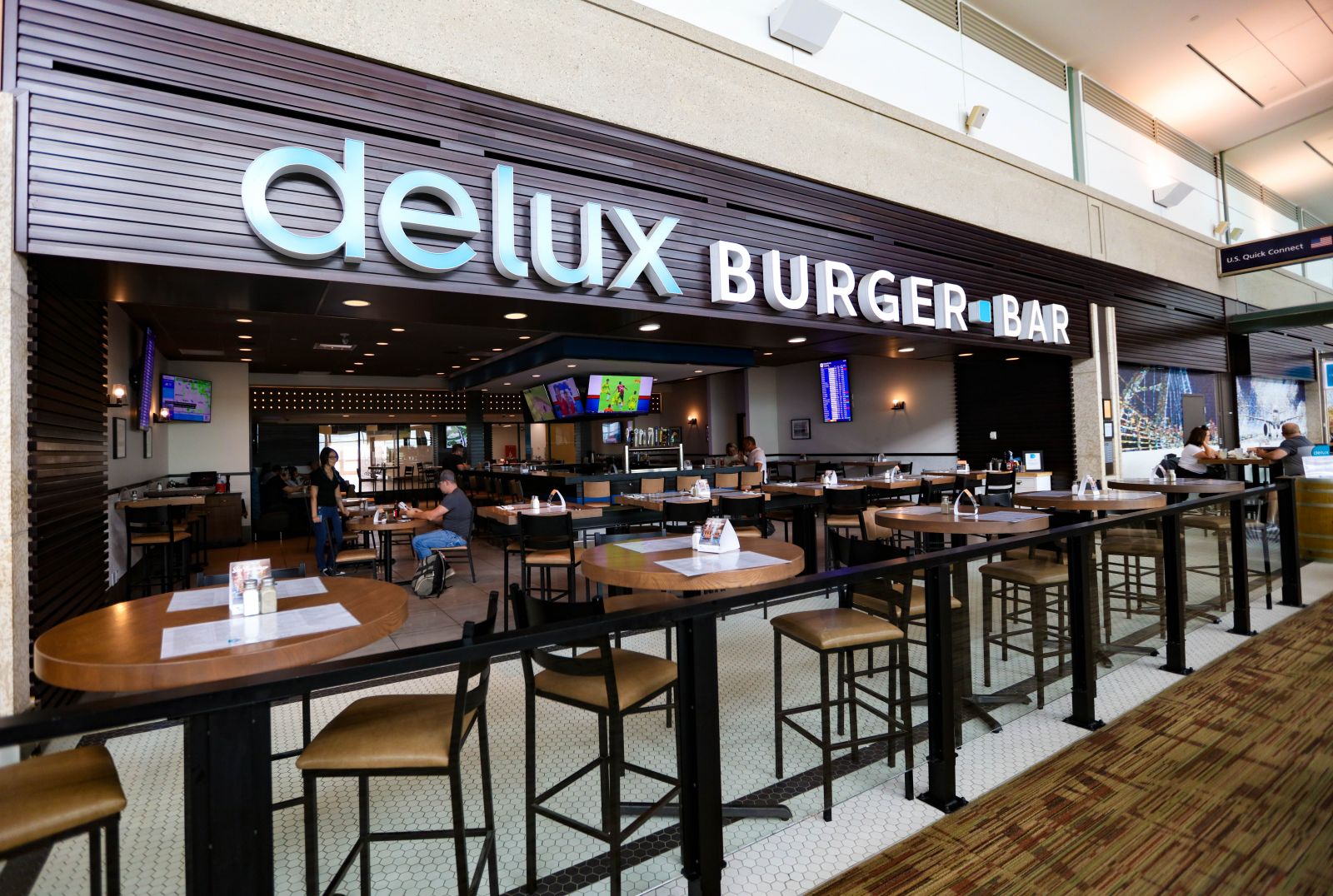
This backdrop creates an affordable business lounge for those who are not in business class and are seeking a step up from the fast food court experience.
At London Heathrow’s T5, the famed restaurateur and celebrity chef Gordon Ramsay opened the upmarket ‘Plane Food’ in 2008.
Although the value for the price of food at the restaurant has met withmixed reviews, Ramsay has
demonstrated that haute cuisine certainly has a place within airports.
At Singapore Changi, fast food and coffee shops dominate the landscape, yet as at Heathrow, things are starting to change. Cantonese and South Asian restaurants are beginning to sprout up, offering buffet or a la carte options among décor that exudes quality and a touch of class.
In fact, the prospect of having entire culinary districts within an airport is not far off. Transforming the basic concept of the food court into an area where travellers are able to experience the tastes, sights, smells and sounds of native cuisine through locally based restaurants and entrepreneurial food kiosks is quickly picking up pace in many airports around the world.
The movement towards serving higher quality, healthier local fare connects passengers with the city and country that they are passing through. Global travel food and beverage operator, SSP, has been pushing the limits on exploring and delivering dining experiences that are authentic to the regional context that is found beyond the airport.
To stimulate such ‘culinary terraces’, airport operators have recognised the power of creating a sense of place to replicate, for example, the feeling of being in a small café overlooking a central plaza, or a famed restaurant in a chic entertainment district. This organic passenger experience delivers travellers with a reflection of the local culture.
At Boston Logan, ‘Dine Boston’ allows customers to try the different tastes of the Atlantic Seaboard through its ‘visiting chef’ programme. Well known local chefs from around Boston create specialty items for the menu that incorporate regional ingredients and flavours.
It seems that the days of surviving on giant muffins and watered-down coffee are becoming a thing of the past for many air travellers.
As the culinary traditions swiftly transform within airports, retail shops are experiencing a change as well. Operators are taking higher risks to reach certain segments and niche markets that have not previously been exploited in airport settings.

Harrods department store has transformed its offering at London Heathrow with the opening of a new flagship outlet at Terminal 5 that boasts more than 11,000 square foot dedicated to fashion and accessories.
Previous offerings at London Heathrow displayed the Harrods brand in multiple small boutique shops, where purchases were limited to logo merchandise and souvenirs, including pens, mugs, handbags, specialty food items and teddy bears emblazoned with the Harrods logo.
The new micro-department store is designed to give a teaser of the Harrods shopping experience to travellers who may not be able to visit the famous store in London.
Creating a ‘multi-sensory experience’ that supplements the typical retail experience is one route that Nokia has taken at Heathrow’s T5. In March 2008, the first airport Nokia flagship store opened with much fanfare, allowing customers to test the latest handsets and other Nokia devices, update their music collections at the music store, as well as download Nokia maps and city guides.
Seamless LCD screens around the store ‘communicate’ information and specifications for Nokia products as well as marketing materials to promote the Nokia brand. Customers have the ability to be fully interactive within a multi-media environment. Nokia’s brand exposure to a globally minded tribe of digital consumers is aptly manifest in the store and on the marquee T5 digital pylons through its slogan ‘Connecting people’.
Hong Kong International Airport is a leader in this high-tech segment, with a heavy emphasis on portable multimedia items such as mobile phones, digital cameras and music players.
Meshed together with the duty-free price incentives, this offering is made possible within their key retail facilities inside of Terminals 1 and 2. This is where travellers are able to pick up the latest models in a setting that evokes thoughts of the world’s most popular high streets and shopping districts.
Hong Kong International, however, goes beyond being a leader in offering the latest technological gadgets. Travellers in its East Hall are exposed to a cornucopia of designer brands that could make even the most popular shopping mall environs envious. From Chanel and Cartier, to Gucci, Hermes and Hugo Boss, the finest brand names in fashion and accessories grace the East Hall.
The gateway is also a place of firsts. It was the first airport in the world to have Ralph Lauren and Prada boutiques, a Giorgio Armani Cosmetics store, and the first in Asia to feature the well-regarded La Prairie cosmetics.
But the gateway is not just about high-end boutiques. More reasonably priced clothing brands such as Calvin Klein, Quiksilver and Giordano are strategically placed to bring balance and affordability.
What Hong Kong is able to display through this retail mix is that there may ultimately be no brand that is untouchable for the airport retail market. It just takes the proper shopper profile conditions and location for a fashion or beauty and cosmetics retailer to locate within an airport.

At Vancouver International Airport (YVR), a balance of luxury fashion, multi-media and food offerings are woven through the recently opened international departures concourse, centred around the tranquil setting of a stream, waterfall, native art, and an aquarium.
Under the Aldeasa duty free banner, brands including Biotherm, Burberry, Escada and Salvatore Ferregamo offer premium products in this relaxed yet trendy setting. YVR also recently rolled-out its “Vancouver 2010 Winter Olympic Games” stores, which feature logo merchandise in celebration of these Olympic Games.
These elements work in serendipitous harmony to enhance the passenger experience through education and communication of place together with a global retail offering.
Recognised brand retailers are realising that airport retail is a profitable option, as an alternative to shopping malls and high streets.
According to the International Council of Shopping Centers (ICSC), sales for non-anchor tenants in shopping malls dropped 4.7% in 2007, and even greater decline has been reported in 2008 due to the global economic crisis. These figures will take some time to return to previous levels. However, per capita retail sales performance at airports has remained constant and has considerable growth prospects moving forward.
The challenge is for retailers to achieve more sales from fewer customers, which will be accomplished by offering experiencebased retailing, as found at Vancouver International Airport.
Looking towards the future, airport retailing seemingly wants to leave no stone unturned when it comes to new retail concepts. At Copenhagen Airport, Danish giftware supplier Illums Bolighus will open a new concept store in the summer of 2009, where travellers will be able to experience a sample of Danish and Scandinavian art, furniture and design.
At Amsterdam Schiphol, standalone fully automated retail outlets are going into operation. Called ‘The Shopping Wall’ and created for placement around departure gates where retail has largely been absent in the past, these modern machines will offer small items for sale such as digital electronics and children’s toys.
Products are displayed in full view for the customers behind glass, while they can read more detailed information and pay for their purchases on touch-screen LCD monitors.
Similar vending machines are being used at Minneapolis St Paul International Airport in the USA to sell portable items such as Apple iPods and Proactiv Cosmetics. This concept creates another multi-sensory experience for passengers waiting to board a flight.
With so many retail and restaurant concepts emerging at airports over the past decade, one must wonder what the limitations are for airport retailing. Through trial and error, retailers will discover and realise what works.
The only thing constant in retailing is change and the brand exposure to travelling consumers that airports enjoy will increasingly become the next generation testing grounds for new retail concepts.
Airport retail areas have become valuable components that add integral value for enhancing the passenger experience and to generate sought after non-aeronautical revenues.
Don’t be surprised, if in the near future you are walking through a major airport anywhere in the world, and you say to yourself, what are they going to think of next?